Capitalizing on the Buyer Journey: A Step-By-Step Plan for Creating a Sales Funnel
Author: Chanell Turner
To truly understand how to capitalize on the buyer journey, think about the last time you bought something. What was your process? Did you take time to research reviews? Did you ask a friend if they had experience with the item? How much did you consult a company’s website or social media presence before making a purchase? Believe it or not, these are all a part of a customer’s buying journey. According to Marketo, 96 percent of visitors who come to your website are not ready to buy yet. So, how do you facilitate a process that keeps you in mind for purchasing?
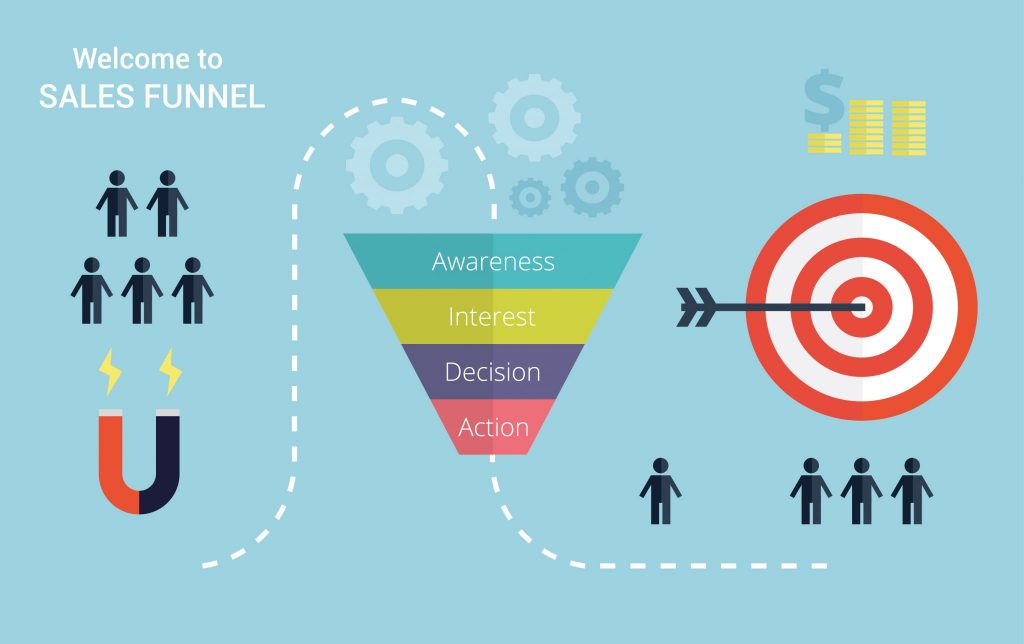 One excellent tactic to use is creating a sales funnel. This term is a multi-step process for moving potential customers into buyers. There are many ways to describe each step broadly, but Entrepreneur.com does a great job of highlighting each phase of the process:
- Awareness – This stage is when a potential customer first visits your website. This step could be through an organic search, social media referral, or reference from a peer.
- Interest – You build on the initial engagement by peaking a customer’s interest with blog content, web copy, social media postings or other avenues that tell a story about what you do.
- Decision – Now, it is time to encourage a prospect to make a decision. This could be an inquiry to join an email newsletter, take a webinar, or subscribe to a YouTube channel.
- Action – Finally, customers will make the ultimate decision to purchase based on the tactics used to guide them through the sales funnel.
So, how do you create a sales funnel? How do you create a system to walk customers through a process that leads to a purchase? Here are four steps for building out your sales funnel.
Provide Ample Education
Before asking anyone to do anything, you should first build trust by telling your potential customers who you are, what your business does, and how buying from you helps them. This starts with:
- Creating a user-friendly website with clear and engaging copy that describes your company and product or service.
- Producing blog content that doesn’t just push a product, but also addresses information or trends that help customers within your industry.
- Making a practice of sharing relevant content on social media.
- Using keywords and SEO tactics that make it easy for customers in your industry to find you through organic search.
Answer Your Customer’s Most Pressing Questions
Now, is the time to peak their interest and provide resources to help answer questions they have about the problem your product or service is set to address. This is where you offer more in-depth opportunities for education:
- Advertise your email newsletter and provide sample content that lets them know what to expect.
- Create engaging freebie content like case studies, whitepapers, and longer blog posts that establish you and your company as an authority figure in your given industry.
- Provide information about the features of your product or service, pricing breakdowns, and comparisons to competitors.
- Invite potential customers to free webinars, demos, or online courses that educate customers about your product or service.
Encourage the First Decision
By this point, you have cultivated your potential customers and have shown them what you do and why they should make a purchase. Some may have already committed, but for the rest, it is time to deepen the relationship.
- Make a direct ask to join your email newsletter.
- Use the newsletter to advertise sales, discounts, or rewards.
- Promote your social media accounts so customers can join or follow.
- Retarget your ads.
Respond to the Action
By this point, you will get a sense for how each part of the sales funnel process impacts the buyer journey since customers should be purchasing at this point. So, this stage should focus on analysis and follow up:
- Automate thank you emails for purchases.
- Ask for reviews and testimonials.
- Send out surveys inquiring about their customer experience.
- See which tactics are encouraging the most conversions.
- Use current data to project how many customers you need at each stage of the funnel to eventually see a conversion.
Final Thoughts
Creating a sales funnel is one of the best things you could do for your business. Sales funnels ensure you are meeting the needs of your customers while gathering data to see what works and what doesn’t. It allows you to get in the driver’s seat when it comes to facilitating conversions. Many CRM systems and email clients even let you automate many parts of this process. If you are struggling to cultivate potential customers into buyers, a sales funnel could be the key to your lead generation and conversion growth efforts.
Growth Strategy, Headlines, Articles